

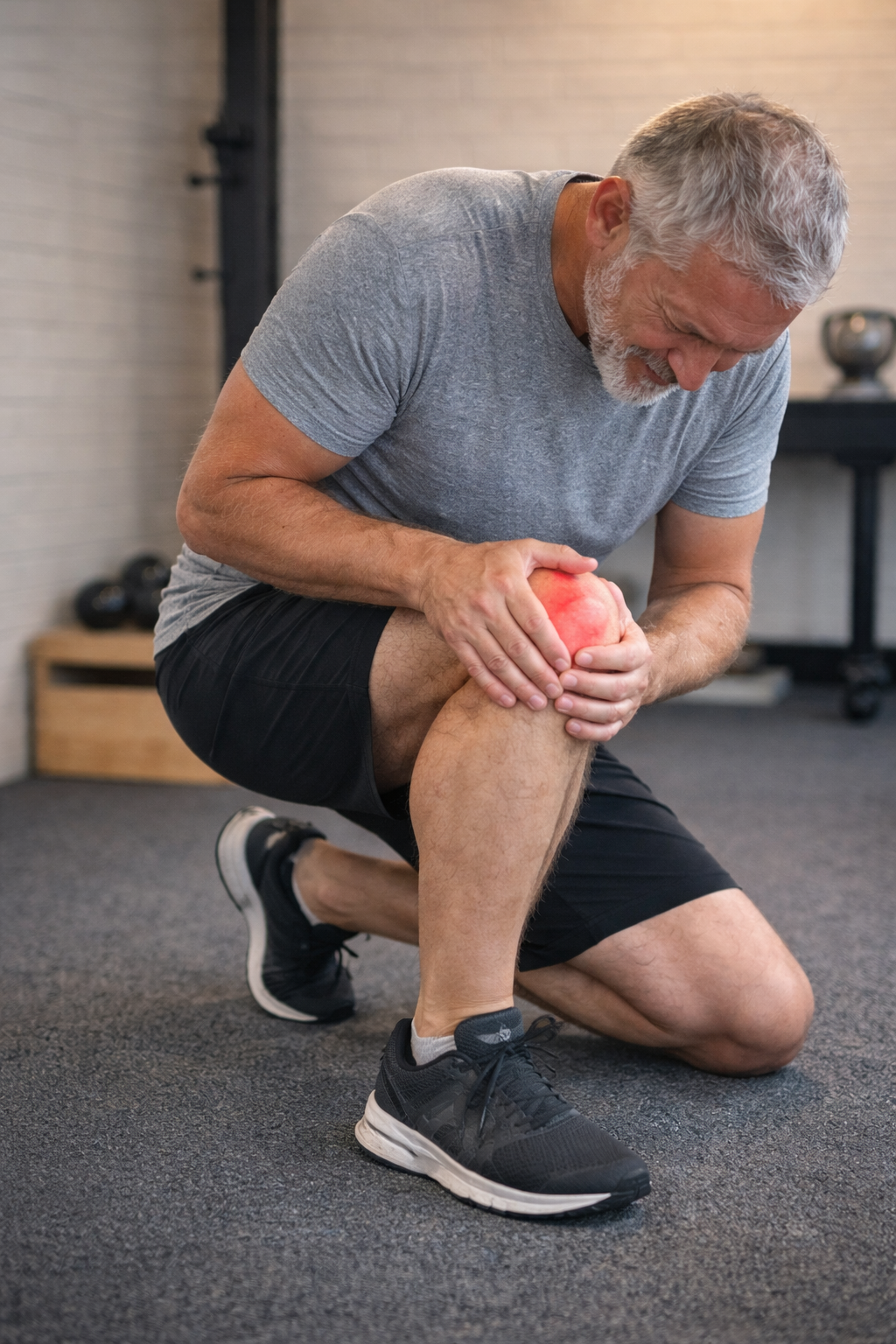
If you have knee pain when bending or squatting, you are not alone. Whether it happens when you sit down, kneel, use the stairs, or bend to pick something up, this type of knee pain can make everyday life frustrating fast.
Sometimes it starts as a small ache. Then you begin to notice it when using the stairs, getting up from a chair, working out, or even crouching down for a few seconds. The good news is that knee pain when bending or squatting is often treatable, especially when you address the real cause instead of just trying to rest through it.
In this guide, we’ll walk through some of the most common reasons your knee may hurt when you bend it or squat, when it may be time to take it more seriously, and how physical therapy can help you get back to moving with confidence.

Dr. Jacob Tomlinson
Physical Therapist
What Causes Knee Pain When Bending or Squatting?
There are several reasons your knee may hurt when you bend it. Some are related to irritation around the kneecap, while others involve the cartilage, tendons, or surrounding muscles. Here are a few of the most common causes.
1. Patellofemoral Pain Syndrome
Patellofemoral pain syndrome is one of the most common reasons people feel pain in the front of the knee. It often shows up during squatting, stair climbing, kneeling, or sitting for long periods.
This type of pain usually happens when the kneecap is not moving as smoothly as it should. Weakness in the hips or thighs, poor movement patterns, and overuse can all contribute. Many people describe it as a dull ache around or behind the kneecap.
2. Tendon Irritation
The tendons around the knee can also become irritated, especially if you have been doing a lot of jumping, squatting, lifting, or repetitive activity. When this happens, bending the knee can feel sharp, sore, or stiff.
This is common in active adults, gym-goers, runners, and people whose jobs require frequent bending or kneeling.
3. Meniscus Irritation
The meniscus is a piece of cartilage inside the knee that helps absorb shock and improve stability. If it becomes irritated or injured, you may feel pain when squatting, twisting, or bending deeply.
Some people also notice clicking, catching, or a feeling like the knee does not move smoothly. In more noticeable cases, the knee may swell or feel like it gets stuck.
4. Knee Arthritis
Arthritis can make bending the knee more uncomfortable, especially first thing in the morning, after sitting for a while, or after a busy day on your feet. People often notice stiffness, aching, and reduced motion.
Even though arthritis is common, pain with bending does not automatically mean surgery is the answer. In many cases, the right exercises and movement plan can make a big difference.
5. Muscle Weakness and Poor Movement Mechanics
Sometimes the issue is not damage in the knee itself. The knee may hurt because it is being overloaded by weakness or poor control in the hips, glutes, quads, or ankles.
If the muscles around the leg are not supporting movement well, more stress gets pushed into the knee during squats, stairs, lunges, and everyday movement. This is one of the biggest reasons pain keeps coming back.
Knee pain when bending or squatting can develop over time when the knee is repeatedly stressed without proper strength or control.
When Should I Take Knee Pain Seriously?
Not every sore knee is an emergency, but there are times when it makes sense to stop guessing and get it checked out.
You should pay closer attention if:
- your knee is swelling regularly
- the pain is getting worse instead of better
- you feel locking, catching, or giving way
- you cannot bend or straighten the knee normally
- it hurts to put weight on it
- the pain has lasted more than a couple of weeks
- you have stopped doing workouts, walks, or normal daily tasks because of it
These signs do not always mean something severe is going on, but they do mean the problem is worth evaluating.
Why Rest Alone Usually Does Not Fix It
A lot of people assume knee pain means they just need to stop moving for a while. Sometimes short-term rest can calm things down, but rest alone usually does not solve the root problem.
If your knee hurts because of weakness, poor movement control, stiffness, or repeated overload, the answer is usually not doing less forever. The better approach is finding the right kind of movement, improving strength, and gradually building tolerance again.
That is why many people feel better for a few days after resting, only to have the pain return as soon as they squat, exercise, or get more active again.
Not sure what type of knee problem you may be dealing with?
Take our Knee Pain Quiz to get a better idea of what may be contributing to your pain and what to do next.
How Physical Therapy Treats Knee Pain When Bending or Squatting

Physical therapy helps by figuring out why your knee hurts in the first place and building a plan around that.
At Ascend Physical Therapy, treatment is focused on helping you move better, feel stronger, and get back to doing the things you want to do without constantly worrying about your knee.
Your plan may include:
- improving hip, quad, and glute strength
- restoring mobility in the knee and surrounding joints
- correcting movement patterns during squatting and bending
- reducing irritation without completely stopping activity
- gradually returning to workouts, walking, sports, or daily tasks
The goal is not just temporary relief. The goal is helping you build a knee that handles life better.
Can I Still Exercise If My Knee Hurts?
In many cases, yes — but it depends on what is causing the pain and how severe it is.
Completely avoiding movement is not always the best option. Often, the better path is modifying activity so you can keep moving without making things worse. That may mean changing your squat depth, adjusting your exercise selection, lowering the load, or improving form.
If you are unsure what is safe, that is where getting professional guidance can help.
Knee Pain in Hendersonville, TN
If you are in Hendersonville, TN and your knee hurts when you bend it, squat, kneel, or use the stairs, you do not have to just push through it and hope it goes away.
At Ascend Physical Therapy, Dr. Jacob works with active adults who want real answers and a plan that makes sense. Whether your pain is new or has been bothering you for months, the first step is figuring out what is actually driving it.
What to Do If You Have Knee Pain When Bending or Squatting
If you are dealing with knee pain when bending or squatting, the most important step is identifying the cause and addressing it early. Waiting too long or relying on rest alone can allow the problem to persist or worsen over time.
Take the Next Step
If your knee pain is limiting your workouts, daily routine, or confidence with movement, it may be time to get it checked out.
Book an Initial Evaluation with Ascend Physical Therapy in Hendersonville, TN and get a clear plan for what to do next.
You can also explore more knee pain resources on our blog, including:
- Why Does My Knee Hurt Going Up or Down Stairs?
- Knee Pain When Walking: Causes and When to See a Physical Therapist
- Why Your Knee Pain Keeps Coming Back (Even After Rest)
ASCEND PHYSICAL THERAPY LLC
101 Tennessee Way STE 300, Hendersonville, TN 37075, United States
United States

Leave a Reply