


Inside Knee Pain: Why the Inner Side of Your Knee Hurts
Pain on the inside of the knee can be frustrating, especially when it starts showing up with walking, stairs, squats, or workouts. Here are a few common reasons it happens — and when it may be worth getting checked.

If the inside of your knee hurts, it is easy to start wondering if something is torn, damaged, or getting worse.
Sometimes that pain comes on after a clear injury, like a twist, awkward step, or fall. Other times, it builds slowly and you only notice it during certain activities — like going up stairs, walking longer distances, squatting, running, or getting up from a chair.
The tricky part is that the location of the pain gives us clues, but it does not always tell the whole story. Pain on the inner side of the knee can come from the knee itself, but it can also be influenced by how your hip, ankle, foot, and leg are moving together.
That is why guessing based on symptoms alone can be frustrating. The better question is: why is this part of the knee getting irritated in the first place?
Start with a knee pain assessment.
If the inside of your knee keeps bothering you, a one-on-one assessment can help you understand what may be driving it and what to do next.
Common reasons the inside of your knee may hurt
Inner knee pain can come from a few different areas. The right plan depends on how it started, what movements bother it, and what your knee is having trouble tolerating.
Meniscus irritation
The meniscus helps cushion the knee. When it gets irritated, pain may show up with twisting, squatting, bending, or movements where the knee feels like it catches or pinches.
MCL irritation
The MCL is a ligament on the inner side of the knee. It can get irritated after a twist, side-to-side stress, or an awkward step.
Joint irritation or arthritis
Some people feel an ache, stiffness, or soreness along the inside of the knee because the joint is irritated, especially after activity or after sitting for a while.
Movement habits
Sometimes the painful spot is not the only problem. The knee may be taking extra stress because of how the hip, foot, ankle, or quad is moving.
Does inside knee pain mean something is torn?
Not always. This is one of the biggest worries people have, but pain on the inside of the knee does not automatically mean you tore something.
A tear or ligament injury is more likely when there was a clear moment that caused it — like a twist, fall, pop, or sudden sharp pain. But if your pain came on slowly, or mostly shows up with certain activities, it may be more related to irritation, weakness, stiffness, or how the knee is being loaded.
The goal is not to scare you or make you stop moving forever. The goal is to understand what your knee can handle right now, what it is not handling well, and how to build it back up safely.

When does the pain show up?
One of the most helpful things you can notice is when the inside of the knee starts bothering you.
Walking: If it hurts during longer walks, your knee may be having trouble with repeated load or how your leg absorbs impact.
Stairs: Stairs ask more from the quads and knee joint. Pain here can show up when the knee is irritated or not tracking well.
Squats or lunges: Pain with these movements can happen when the knee is not ready for that depth, load, or position yet.
Running or sports: Inner knee pain can flare when mileage, speed, hills, cutting, or training volume increases too quickly.
A few movement examples from Ascend
These are not meant to diagnose your knee, but they give you an idea of the type of strength and control work that may be part of a knee rehab plan.
Step Ups
A simple exercise that can help build strength and control for stairs, walking, and everyday movement.
Reverse Lunge for Knee Pain
A useful variation for building leg strength while keeping the movement more controlled.
What can you try first?
If your pain is mild and did not start from a major injury, you may not need to panic. A few small changes can help calm things down and give your knee a chance to recover.
Back off the thing that keeps flaring it up. This does not always mean full rest. It may just mean reducing stairs, running, deep squats, or long walks for a short time.
Notice how your knee moves. If your knee caves inward during stairs, squats, or lunges, your hip and foot mechanics may need work.
Build strength slowly. The knee often feels better when the quads, hips, hamstrings, and calves are stronger and better coordinated.
Do not just copy random exercises online. A good exercise for one person can irritate another person if it does not match what their knee needs.
When should you get it checked?
If your knee is swollen, locking, giving out, painful after a twist or fall, or not improving after a couple of weeks, it is a good idea to have someone look at it.
How physical therapy can help
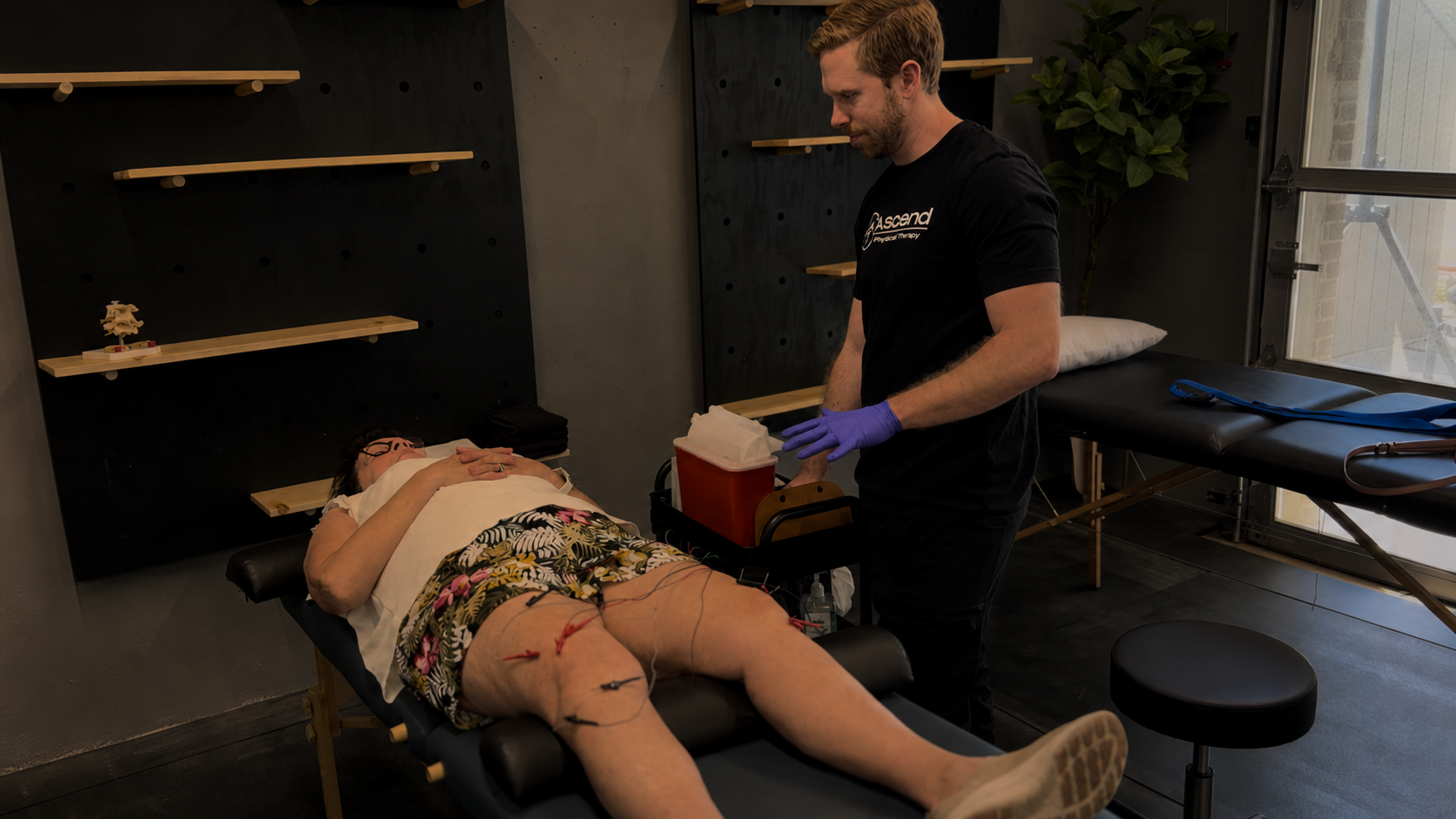
At Ascend Physical Therapy, we do not just look at where it hurts and hand you a sheet of exercises.
We look at how your knee moves, how strong it is, how your hip and ankle are helping, how you walk, how you squat, and what your knee needs to get back to your normal routine.
From there, your plan may include hands-on care, strength work, mobility, movement retraining, and a gradual return to the things you want to do — whether that is walking, stairs, workouts, running, or sports.
The goal is simple: help you understand what is going on and give you a plan that actually fits your body.
Planning your first visit?
Here are a few quick answers about working with Ascend Physical Therapy.
Do you accept insurance?
Ascend Physical Therapy is an out-of-network provider. That means we do not bill insurance directly, but we can provide a superbill that you may submit to your insurance for possible reimbursement.
What happens during the first visit?
Your first visit is focused on understanding your symptoms, your goals, and how your knee is affecting daily life. You will receive a one-on-one assessment and a plan for what to do next.
Do I need a referral to start physical therapy?
In Tennessee, many people can start physical therapy without a physician referral. If your situation requires additional medical clearance or a referral, Ascend can help guide you through the next step.
How do I know if Ascend is the right fit?
Ascend is a good fit for people who want one-on-one care, a clear plan, and a more personalized approach instead of feeling rushed through a generic exercise sheet.
Still guessing why your knee hurts?
If pain on the inside of your knee is affecting your walking, stairs, workouts, or daily life, Ascend Physical Therapy can help you figure out what is going on and what to do next.


Leave a Reply