

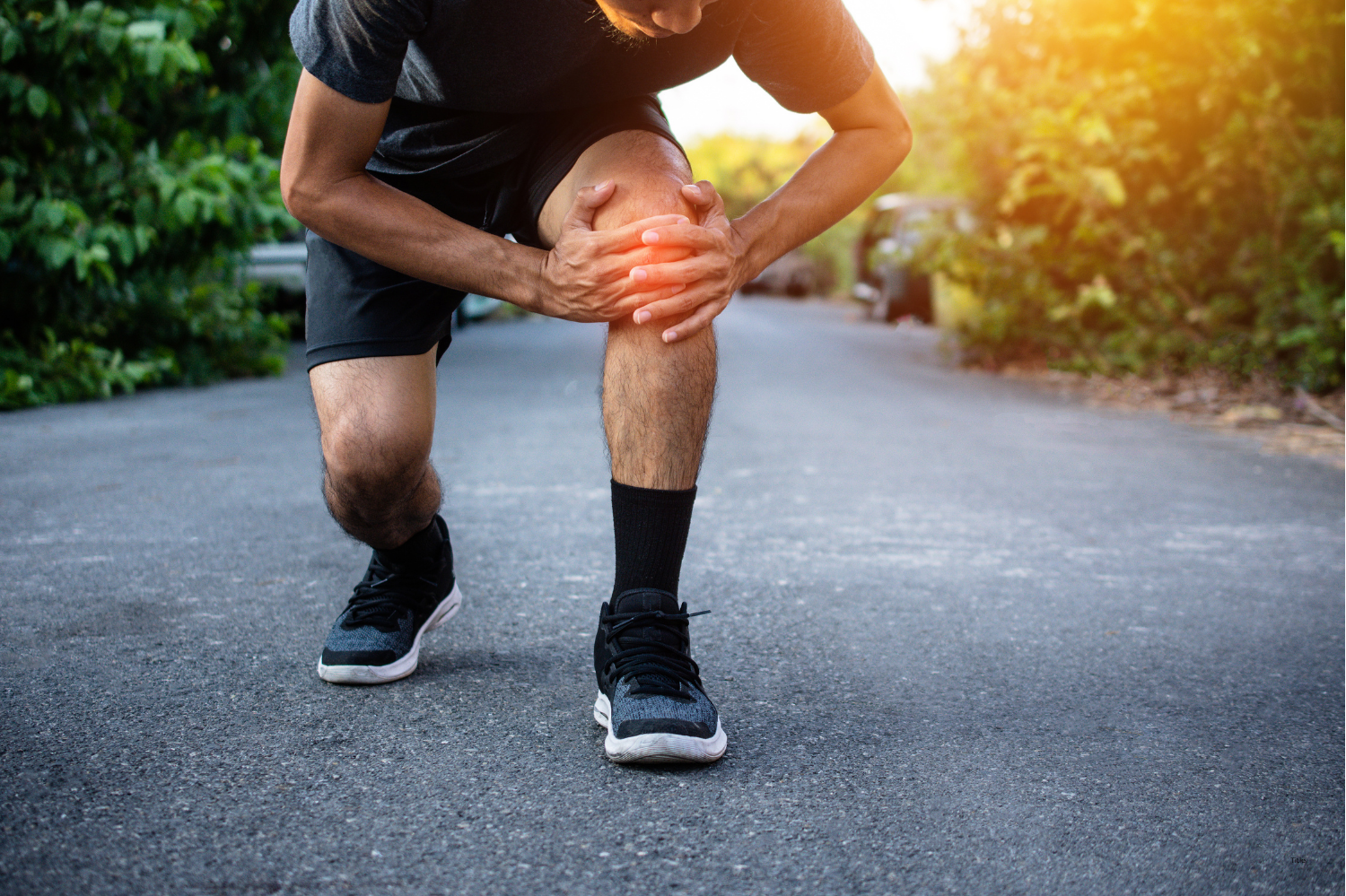
Iliotibial Band Pain Treatment:
3 Best Exercises for relief
If you’ve ever gotten that sharp, nagging pain on the outside of your knee mid-run, you’ve probably blamed your shoes. You have also blamed your stride. Or you have just thought it’s due to “getting older.” It’s even worse if it happens every time you run. But more often than not, the real culprit is something called IT Band Syndrome.
Let’s discuss IT Band Syndrome. Why does it flare up when you hit the asphalt? Why won’t foam rolling 100% treat it? More importantly, how can you fix it?

What is IT Band Syndrome?
IT Band Syndrome (or ITBS) happens when the Iliotibial Band gets irritated. This band is a thick, connective tissue on the side of your leg. With every stride, the IT Band rubs on your thigh bone (the lateral femoral condyle). When this rubbing happens too often, too forcefully, or with bad mechanics, it becomes inflamed and painful.
ITBS results in pain on the outside of the knee. The pain can radiate up the thigh or down the outside of the leg. It can also cause a “snapping” sensation on the side of your leg.
who Gets ITBS?
ITBS is an overuse injury. It gradually creeps in as an annoying ache. Without proper treatment, that annoying ache evolves into pain. People most susceptible to ITBS are:
- Runners – especially distance runners
- Cyclists – looking at you, Peloton
- Lifters – squatting with sketchy form
- Newbies – progressed too fast without training
Women are more to get ITBS than men. The wider the hips, the more force is placed on the IT Band at the knee, which can cause irritation.
Similarly, taller individuals have longer stride lengths or altered running mechanics. This results in excessive force placed on the IT Band.
Excessive weight gain does not alway correlate with ITBS. Even lean runners get ITBS. Overweight or obese runners experience a different knee pain, from knee joint overload.

how to fix ITBS
ITBS is difficult to treat – because the problem is not the IT Band. It’s usually the hip muscles not working properly. It feels right to stretch and foam roll over the painful spot on the knee. However, you’re missing the root cause. And you actually just be making the problem worse.
Stop doing the following exercises and stretches
These are common DIY treatments for ITBS. They seem like they are helping. However, they are actually masking the pain and making it worse.
Foam Rolling – the IT Band is not a muscle, so it won’t “loosen up” like a muscle. Foam rolling helps to desensitize the pain temporarily, but that’s where the benefits stop.
Stretching – stretches and yoga are very beneficial, but don’t do anything to the IT Band itself. You’d have better luck stretching a seat belt.
Rest – if you stop running, the pain will go away. But the pain returns like clockwork when you hit the pavement. That’s because the root problem was never addressed – it was just avoided.
New Shoes or Braces – buying new digs does not help fix the root cause: weakness in the hips. Similarly, braces and KT Tape help to treat symptoms of ITBS, but the root cause is still left untreated.
Exercises that work
You need to address the root cause to truly get rid of ITBS. Stop chasing the pain. For most people, this is usually the hips.
Watch Dr. Jacob demonstrate a safe IT Band stretch to relieve tension and improve flexibility.
Why the hips?
The gluteus medius is a muscle on the side of your hip. It helps keep your hips aligned over the leg bone. This bone is called the femur when running. When this muscle is weak, the hips become mis-aligned which strains the IT Band.
Similarly, the tensor fascia latae (TFL for short) is a muscle on the side and front of your hip. It also aids in stabilizing the pelvis, but it also tightens the IT Band. When this muscle is tight, it pulls on the IT Band and causes irritation and pain.
Lastly, the quadratus lumborum muscle (QL for short) connects the hip bones to the low back. This muscle also aids in stability of the pelvis. When it is tight and weak, it pulls the hip bones closer to the low back. This ultimately places excessive force on the IT Band. It can also result in low back pain as well.
Exercise 1 – Foam Roller Step Overs – Gluteus Medius

What it targets
- Improves hip stability and single-leg control
- Encourages the glute med to fire while keeping the TFL quiet
- Builds coordination and control in the frontal and transverse planes
- Easy to regress or progress based on ability
Why it works
This move fires up your hip and core stabilizers. It targets the glute med on the stance leg, without letting the TFL dominate. Place the foam roller inside the knee. It creates a physical boundary that helps reinforce frontal plane control. This forces the glutes to stabilize, while the moving leg challenges balance.
If the TFL or quads try to compensate, you’ll notice wobbles or hip drop right away.
How to Do It:
Setup:
- Stand tall. Position a foam roller on the inside of your knee. It should be just slightly in front of your stance leg.
- Your stance leg should be planted firmly with a soft bend in the knee and upright posture.
- The moving leg starts behind the roller.
The Move:
- Without leaning or shifting your upper body, step the free leg over the foam roller:
- Tap your heel on the floor in front of the roller
- Step back over, and tap your toe on the floor behind the roller
- Keep your chest up and pelvis level—the stance leg should stay still and strong throughout the motion.
Reps:
- 2–3 sets of 8–10 reps (forward + backward = 1 rep) per leg
- Focus on balance, posture, and control over speed
Exercise 2 – Foam Roller Swing Through – Tensor Fascia Latae

What it targets
- Teaches the brain to disassociate the hip joint from the TFL
- Reinforces controlled mobility through the hip capsule
- Activates glutes and deep rotators, while helping calm overactive TFL
Why it works
This exercise trains hip capsule control—specifically rotational control through full range. When you cue the brain with feedback from the roller, you help the TFL relax its grip on movement. This allows the glutes and deep rotators to take charge.
You’ll feel your brain and butt working harder than your thigh. That’s a win.
How to Do It:
Setup:
- Stand tall with a foam roller pressed gently into the outside of your stance leg’s knee.
- Your stance leg should be slightly bent, with the foot grounded and hips level.
- The swing leg starts behind you with the knee straight and toes pointed forward.
The Move:
- Move the swing leg forward into hip and knee flexion, like you’re taking a step.
- Then slowly extend it back behind you again, keeping the rest of your body perfectly still.
- The foam roller provides feedback—if your stance knee shifts in or out, or if your hip hikes, you’ll feel it.
- Keep your torso stacked, hips square, and core engaged throughout.
Reps:
- 2–3 sets of 8–10 controlled strides per side
- Think of the movement as “walking in place, without letting your form fall apart”
Exercise 3 – Foam Roller heel Taps – QL

What it targets
- Strengthens the quadratus lumborum (QL) and hip stabilizers on the stance side
- Reinforces pelvic control during single-leg balance
- Provides feedback to prevent hip shift or compensation
- Helps with core-to-hip connection for gait, running, and lower back health
Why it works
This move is a game-changer for lateral stability. The QL is a deep core muscle. It connects your spine to your pelvis. This muscle helps stabilize the pelvis when you’re on one leg. If it’s weak, you’ll get wobble, hip drop, or lower back pain.
By adding foam roller feedback, you stop yourself from “cheating” through the motion with your knee or upper body. The stance leg glutes are working, too, but the primary focus is training pelvic control from the trunk down.
How to Do It:
Setup:
- Stand sideways next to a wall with a foam roller gently pressing against the outside of your stance-side knee.
- Bring the non-stance leg straight out in front of you, toes pointed up (dorsiflexed).
- Your hands can be on your hips or holding onto a dowel/light support if needed for balance.
The Move:
- From this single-leg position, slowly drop the pelvis on the side of the lifted leg. Lower it until the heel gently taps the ground.
- Then lift the hip back up. Use the muscles in your lower back. Engage the obliques (QL) to return to neutral alignment.
- Don’t let your stance leg collapse inward. The foam roller will give you instant feedback if your knee caves or your hip shifts.
Reps:
- 2–3 sets of 6–8 slow, controlled reps per side
- Focus on isolation and control, not speed or range
want a runner-Specific movement screen?
Movement Screens are performed by Doctors of Physical Therapy at Ascend Physical Therapy in Hendersonville. Our trained eyes and software will detect the weak links in your running form. Based on this information, we will suggest a customized treatment plan. This plan is designed around your needs and goals. It will treat the root cause of the pain, not just the symptoms.
Qualify for your Movement Screen by clicking the button below. This will book a call with our team. We will ask you specific questions related to your pain. We will also inquire about your goals. If you qualify, we will offer you an appointment.
Not Sure What’s Causing Your Outer Knee Pain?
Get our free Knee Pain Guide to better understand common causes of outer knee pain, factors that may be contributing to your symptoms, and practical next steps you can consider.


Leave a Reply